

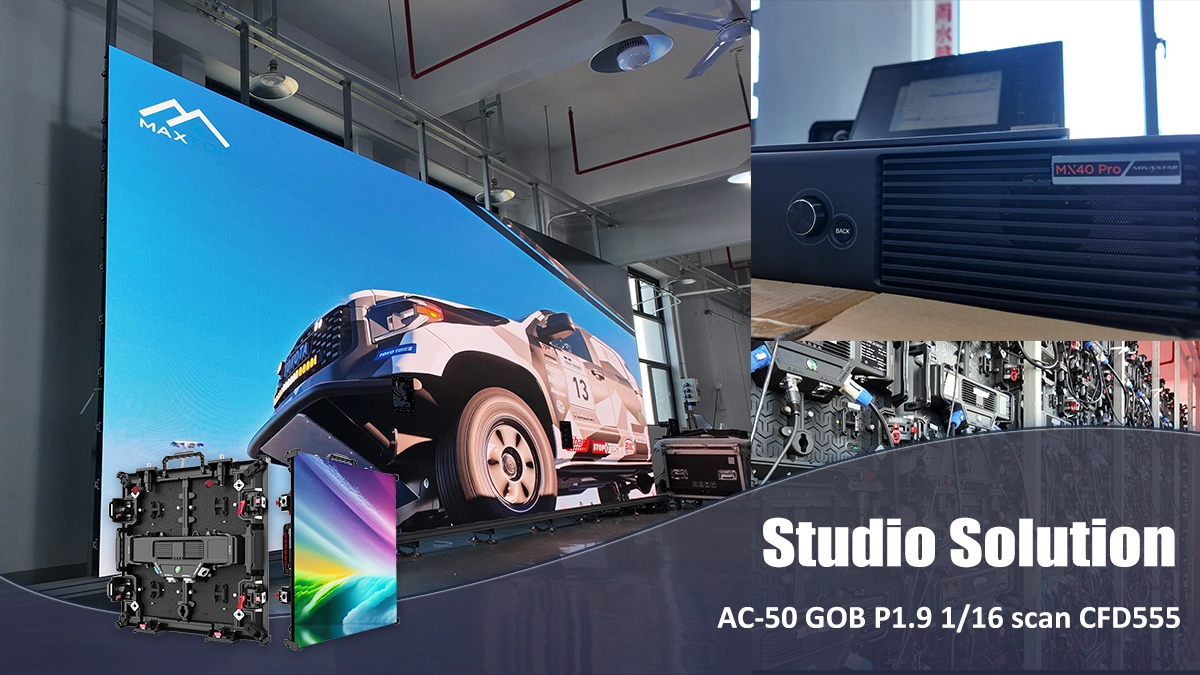
Physical Design: A Perfectly Flat Canvas
The LED screen surface must be absolutely seamless. Cabinet design is critical for this. Advanced systems use an inlaid LED module design. An example is the AC-50 Series B from MAXTOP. This method embeds each module into the frame. It removes the visible “mosaic” effect. The result is a perfectly smooth surface. This flat canvas prevents visual distortion on camera. Gentle curved configurations are also possible. This allows for creative, immersive set designs. Easy front-and-rear access is also vital. It allows for very quick module replacement. This minimizes downtime during important productions.
Display Technology: Pixel-Level Color Precision
Image quality starts with the pixels. The right pixel technology is essential. GOB plus Inkjet Printing is a top choice. The inkjet process is very precise. It deposits quantum dot color conversion materials. This happens at a microscopic level. It enables a very wide color gamut. It also ensures superior color purity. The GOB layer is a clear glue. It seals and protects the modules. This glue also acts as a diffuser. It harmonizes light from individual pixels. This achieves broadcast-grade color uniformity. The sealed coating provides ultimate protection. It guards against dust and moisture. It also protects from physical contact. This ensures long-term color stability.
Drive and Processing: Flawless Motion and Control
Smooth motion is critical for video. The driving ICs control this performance. High-performance chips like the CFD555 are essential. They offer frame rate auto-adaption. This syncs with signals from 23.98Hz to 480Hz. It eliminates screen tearing completely. They also excel in low-gray performance. This shows rich shadow details in HDR. A very high refresh rate is mandatory. It removes all camera scan lines. It prevents black bar interference during filming.
System Intelligence: Reliable and Smart Operation
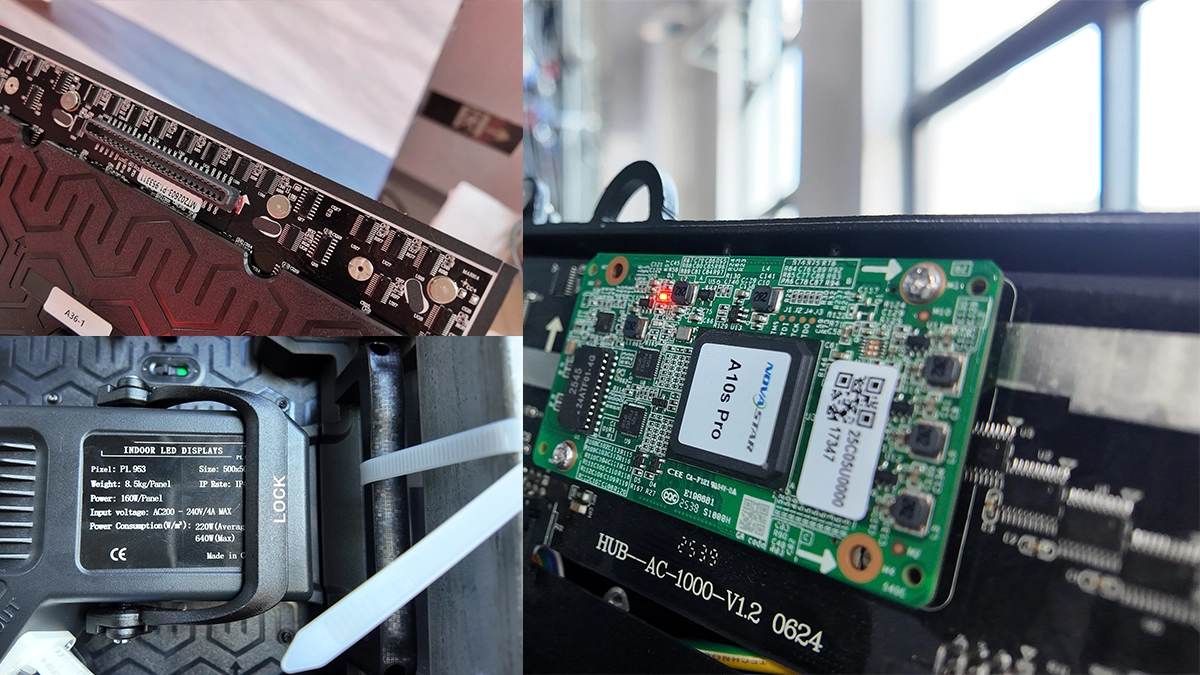
System reliability is engineered with smart parts. High-grade receiving cards form the backbone. The Nova A10s Pro is an example. It includes a broadcast color calibration engine. It supports dual-card hot backup. This feature prevents display failure. The video processor is the system’s brain. A unit like the Nova MX40 Pro is powerful. It handles 4K/8K signals with ultra-low delay. It provides advanced color management tools. It also offers precise genlock synchronization. This is key for virtual (XR) production.
Real Configuration: A German Studio LED Video Wall Project
A German client needed a reliable LED video wall. MAXTOP provided a tailored studio solution. It was a 7m x 2.5m (17.5 sqm) display. They used curved AC-50 Series B cabinets. The screen had GOB + Inkjet P1.953 modules. It used advanced CFD555 drive ICs. The system was built with Nova A10s Pro cards. A Nova MX40 Pro served as the controller. This complete package met all broadcast demands. It delivered the required performance and reliability.
Your Studio LED Video Wall Checklist
Use this list for your project.
- Choose cabinets with an inlaid, flat module design.
- Select GOB + Inkjet modules for best color and protection.
- Ensure the driver IC has a very high refresh rate.
- Pick a system with redundant receiving cards.
- Use a professional video processor for control.
This ensures a flawless studio LED video wall. It will perform perfectly under any camera.
Contact MAXTOP for technical specifications and inquiry.
- Learn More AC Series Rental LED Solutions
- Inquiry Email: info@maxtop-led.com
- Contact WhatsApp: +86 188 7638 4616
- Products Video: Follow Us | YouTube – Anycubic Series